
You’re looking forward to a once in a lifetime hike in the Zion Narrows but a chance of rain is in the forecast. Is it safe to go?? Here’s some info to help you make the best decision for your own safety! The information below is just ONE of many tools you should use to assess the safety of hiking in the Narrows on a given day. We always recommend you speak with the park rangers before entering the Narrows, especially on days with any potential for flash flooding! Your safety is your responsibility!!
What is monsoon season??
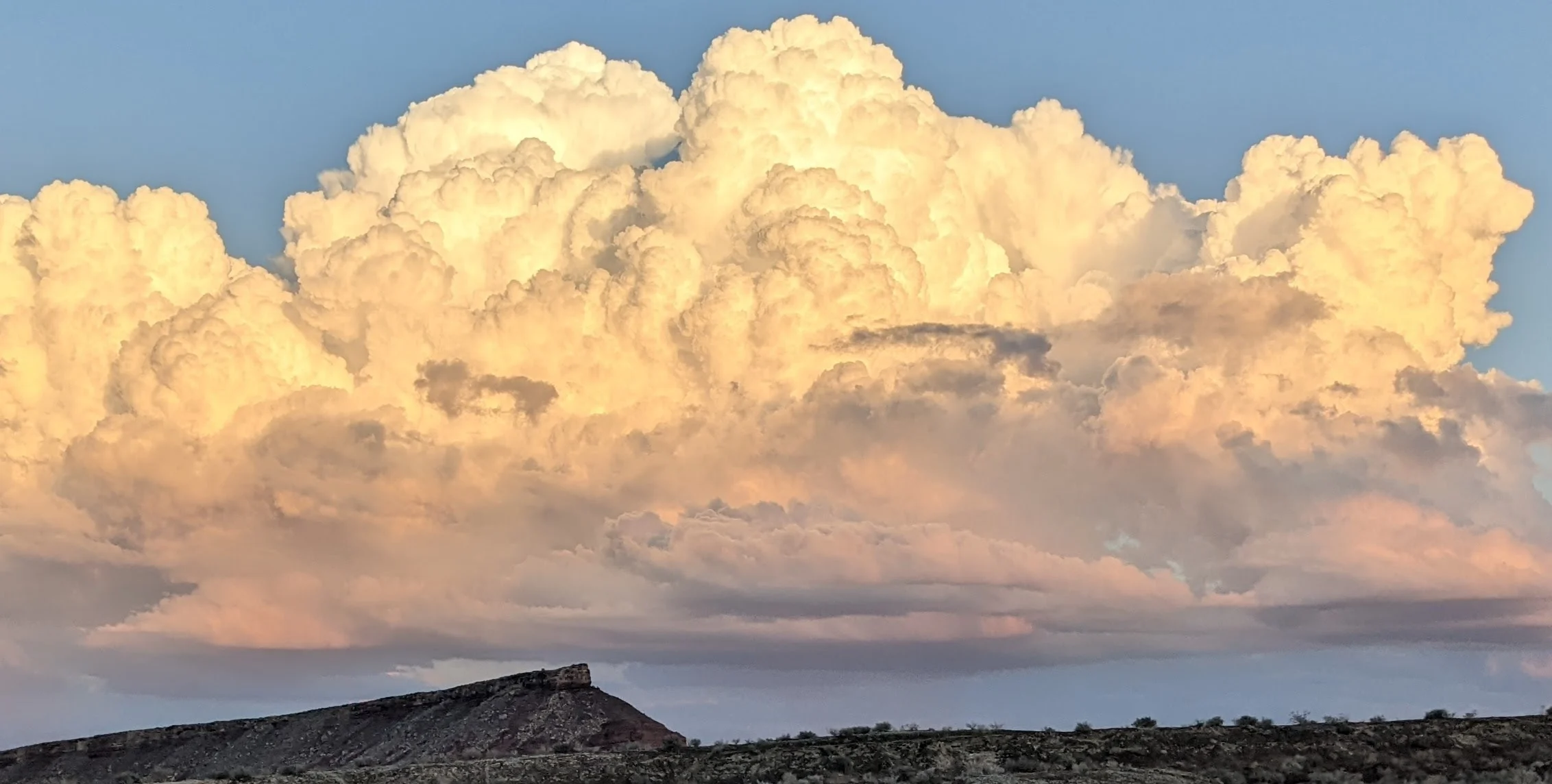
July through mid September is monsoon season in Zion! What does this mean? Many days during late Summer will have a chance of afternoon thunderstorms. Monsoon days often begin with clear, blue skies followed by large storm clouds that grow throughout the late morning and early afternoon. These isolated storms can dump high volumes of precipitation in select areas while nearby areas remain dry. Much of the rain that Zion receives each year comes down during monsoon season. Flash floods can happen any month of the year, but the risk is especially high during monsoon season.
What is a flashflood?
When a large volume of rain comes down in Zion, the rocky soil cannot absorb the sudden moisture. Canyons and washes that are dry most days of the year become temporary rivers as the water makes its way to lower ground. The Narrows is like the end of a giant funnel in Zion with many tributaries that drain into it. Massive amounts of water can flow through the canyon following heavy rain. These sudden bursts of flood water are called flash floods.
What is CFS??
CFS stands for “cubic feet per second”. A cubic foot of water can be compared to a basketball size volume of water; and the CFS is how many of these “basketballs” are going by every second. During a flash flood, the river can rise from a moderate level of about 40 CFS to hundreds or even thousands of CFS in a matter of minutes! For reference; the park considers flows above 150 CFS to be too dangerous to hike.
Check the CFS of the Virgin River in Zion here: https://waterdata.usgs.gov/monitoring-location/USGS-09405500/#dataTypeId=continuous-00060-0&period=P7D&showFieldMeasurements=true
Signs of a Flash Flood:
Flash floods can occur under blue skies since storms from miles away send flood water far down river. Just because it is not currently raining does NOT mean a flash flood is not possible!
Things to watch for:
What to do in a flash flood?
If you observe any of these signs in the river it is essential to seek out high ground. The initial surge of water in a flash flood is generally pushing a wall of debris (logs and full trees) that has been gathered along the way. These flash floods are powerful enough to carry full trees and move large boulders.
How to avoid being caught in a flash flood?
Flash floods in Zion are extremely dangerous but being caught in a flash flood can be avoided! How?? By checking the weather forecast and having a solid back up plan if the weather does not cooperate with your plans! We understand how disappointing it is to cancel a once-in-a-lifetime hike in the Narrows (or any other slot canyon) but it is not worth endangering the lives of yourself or your group members!
Where do I check the weather?
When checking the weather, make sure to look at the canyon’s “watershed” (the top of the funnel that sends water into the Narrows), not just the town of Springdale. In addition to checking the weather forecast, the national weather service provides a Southern Utah Flash Flood Potential Rating each day at the link below.
Check the weather forecast here: https://forecast.weather.gov/MapClick.php?lon=-112.956&lat=37.362
Check the Flash Flood Potential for Zion National Park today here: https://www.weather.gov/slc/flashflood
How to Assess “Flash Flood Potential Ratings” for your hike in the Narrows:
I cancelled my hike in the Narrows and it didn’t even rain!?!?
Yep, it happens all the time! Just because flash flooding is “probable” or even “expected” doesn’t mean it’s for sure going to flash flood or even rain! Weather forecasts predict what could happen but it’s not an exact science! Many hikers feel disappointed that they followed the recommendation to cancel their hike when the day ends and no flash flooding took place. Unfortunately, that’s the nature of hiking in canyon country! Respect the powerful forces of nature that continue to shape Zion Canyon and live to hike another day!
**The information in this blog is ONE of many tools you should use to assess the safety of hiking in the Narrows on a given day. We always recommend you speak with the park rangers before entering the Narrows, especially on days with any potential for flash flooding! Your safety is your responsibility!!